
Damascus & Beirut Tour
Tour details
ISTANBUL – HATAY- ALEPPO
Meeting with our guide waiting for us at Hatay airport and settling into our vehicle. After the Hatay Cilvegözü border crossing and customs procedures, we depart for Aleppo. Upon arrival, on our city tours; Aleppo Castle, the historic Aleppo Bazaar, the Great Mosque, Babul Hadid, and Sabun Han, an important trade inn built in the Ottoman period that was used as a center for the production and trade of olive oil soap and played an important role in the city’s economic and commercial life, are among the places we will see. Afterwards, El-Cdeyde District (Christian Quarter), which we will see panoramically, is one of Aleppo’s oldest and best-preserved historical settlements. During the Ottoman period, it was an important neighborhood reflecting Aleppo’s multicultural social structure with its stone mansions, courtyard houses, churches, and narrow streets, especially where Christian communities lived. Then transfer to the hotel where we will stay, dinner and accommodation at our Aleppo hotel.
ALEPPO- HAMA- HOMS- DAMASCUS
After breakfast at the hotel, depart for the city of Hama. On the route, first visit the Umayyad Caliph Umar ibn Abd al-Aziz (717–720). Then we will see the Norias, large wooden water wheels of Hama, one of the symbols of the city and among the most important examples of Islamic engineering and medieval hydraulic technology on the Orontes River, turning with the power of flowing water. Afterwards in Homs, visit the mosque and tomb of Khalid ibn al-Walid, one of the greatest military commanders in Islamic history, known as “The Sword of God (Sayfullah),” a great companion who stood out with his strategic genius in the spread of Islam. The Church of Ummuz Zinnar, one of the oldest churches in the Middle East, where the sacred belt (zinnar) of Hz. Maryam is believed to be preserved according to Christian belief, and one of the most important symbols of Homs’ multi-religious and multicultural history, arrival in Damascus, transfer to our hotel. After dinner, accommodation at our Damascus hotel.
DAMASCUS
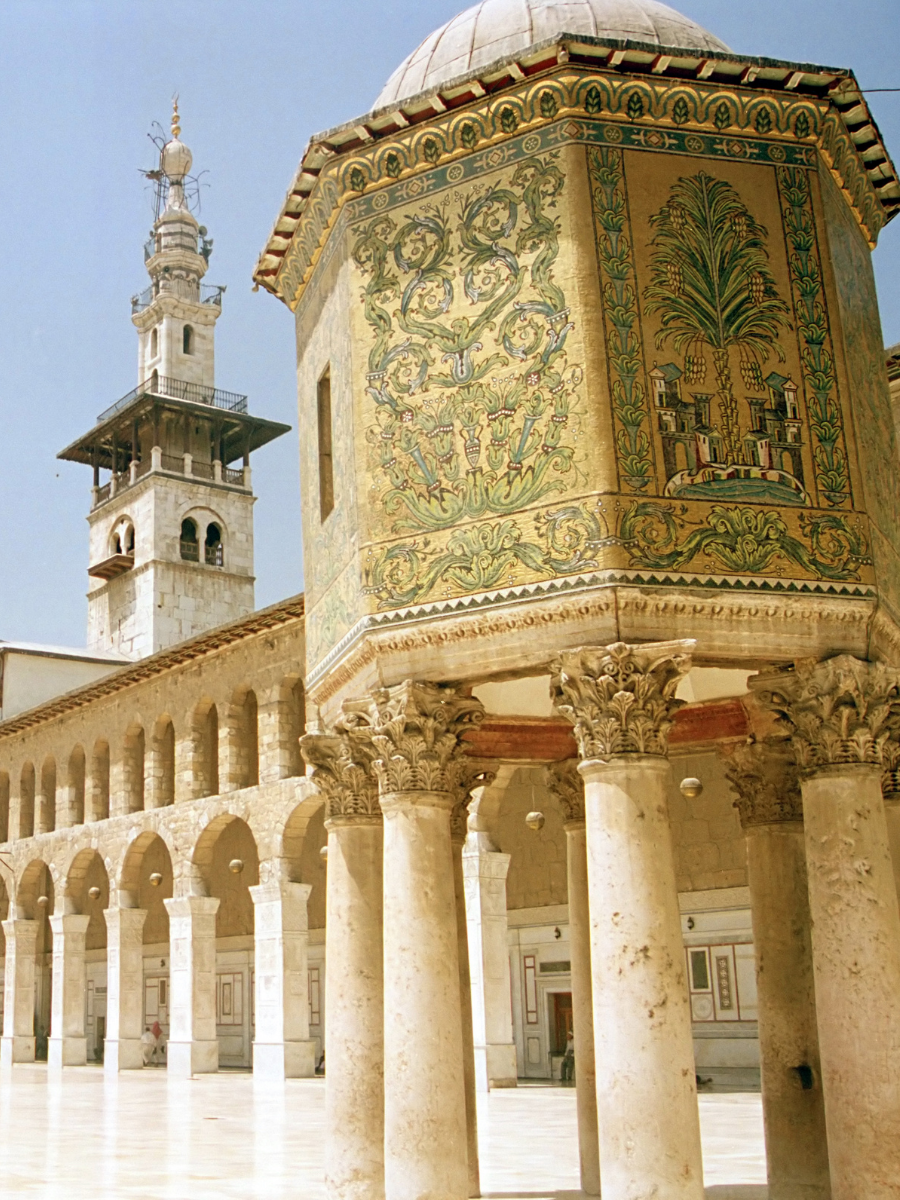
After breakfast at the hotel, we begin our Damascus city tours. Hicaz Railway Damascus Station, Hamidiye Historic Bazaar, and we visit the great commander who recaptured Jerusalem from the Crusaders and one of the most respected leaders in Islamic history, the exalted commander Salah al-Din al-Ayyubi (1137–1193), who holds a special place in history not only for his military success but also for his compassion, justice, and tolerance toward different faiths. Then visit the Turkish Martyr Pilots Monument, made in tribute to the sacred memory of the Ottoman Turkish pilots who were martyred while serving in Damascus during World War I, and the Umayyad Mosque. One of the oldest and most magnificent mosques in the Islamic world, it was built during the reign of the Umayyad Caliph al-Walid I. It is believed that the maqam of Hz. Yahya (a.s.) is inside the mosque, and the structure bears traces of Roman, Byzantine, and Islamic architecture together. Then, Sayyida Ruqayya is the young daughter of Hz. Hussein who passed away at a young age, and her shrine in Damascus is believed to be one of the most important pilgrimage centers in the history of Ahl al-Bayt, especially after Karbala. After that, visit the Azem Palace, built in the 18th century by Damascus Governor Asad Pasha al-Azm during the Ottoman period, one of the most distinguished examples of Ottoman civil architecture. Today it serves as an important museum reflecting Damascus’s social life, traditional living culture, and architecture. Then visit the great Islamic statesman Nur ad-Din Zengi, known for his struggle against the Crusaders and his just rule. (1118–1174). He played an important role in the upbringing of Salah al-Din al-Ayyubi and made Damascus a center of knowledge and justice. After visiting Madrasah al-Nuriyya and the Tomb of Nur ad-Din Zengi, return to our hotel. After dinner, accommodation at our Damascus hotel.
DAMASCUS
After breakfast at the hotel, we continue our Damascus city tours and visits. In today’s tour; first, we will visit the great Sufi, thinker, and philosopher Muhyiddin Ibn Arabi. After visiting the tomb of this great scholar, one of the most influential figures in Islamic mystical thought, especially known for the concept of wahdat al-wujud, we then visit the Seyyide Zeyneb Shrine, the daughter of Hz. Ali and Hz. Fatima and the sister of Hz. Hussein, whose shrine in Damascus is considered one of the most important pilgrimage centers in the history of Ahl al-Bayt, especially after Karbala. Then visit Bab al-Saghir Cemetery, one of Damascus’s oldest and holiest cemeteries, containing the graves of many companions and members of Ahl al-Bayt. Important figures in Islamic history are buried here, especially Bilal al-Habashi, Abu Darda, Umm Habiba, Abdullah ibn Ja'far, Sukayna bint Hussein, and Umm Kulthum. Afterwards, visit the graves of Ottoman Sultan Mehmed VI Vahdeddin, the last sultan of the Ottoman Empire, whose body was brought to Damascus after his death in Italy in 1926 and buried in the cemetery of the Suleymaniye Complex, and members of the Ottoman dynasty of the period. Then transfer to our hotel. After dinner, accommodation at our Damascus hotel.
DAMASCUS- BEIRUT- ISTANBUL
After breakfast at the hotel, first visit the Ancient City of Bosra, the ruins of the Monk Bahira Monastery and church, Roman and Byzantine remains, the Ancient theater and city walls, then depart for Beirut. After the border and customs crossing, on our Beirut tour; the Coastal Road, Pigeon Rocks, Mohammad Al-Amin Mosque (Blue Mosque), a mosque reflecting modern yet classical Ottoman architecture, located in a square with a city view. Then, our guests who wish may join a boat tour over the turquoise Mediterranean waters. By walking around Pigeon Rocks and passing between the rocks, especially at sunset, we will witness unique views for photography. Afterwards, following free time in authentic bazaars (souks), one of the most suitable places to experience Lebanese cuisine, shop for handicrafts, and observe the city rhythm, we move on to Zaitunay Bay, a modern seaside complex full of restaurants and cafés. After a free dinner break, we transfer to the airport at the specified time. Departure to Istanbul with Pegasus Airlines, and our tour ends upon arrival.
What's included
‣ A one-way return flight ticket in economy class on Pegasus Airlines from Beirut – Istanbul (SAW) for international flights
‣ Sightseeing and visits specified in the program
‣ Airport استقبال and round-trip transfers
‣ 4 nights’ accommodation in 4* hotels (1 night in Aleppo, 3 nights in Damascus)
‣ Breakfasts (4) at the hotel
‣ Dinners (4) at a local restaurant
‣ Luxury bus and professional driver service to be used throughout the tour
‣ Professional Turkish-speaking guiding service
‣ Local guiding service
‣ Mandatory Travel Insurance
‣ Syria Visa Fee
Need to Know
***Our tour's starting point is Hatay Airport.
Tour Program
Istanbul – Hatay – Aleppo
Meeting our guide waiting for us at Hatay Airport and settling into our vehicle. After the Hatay Cilvegözü border crossing and customs procedures, we depart for Aleppo. Upon our arrival, among the places we will see on our city tour are the Aleppo Citadel, the historic Aleppo Bazaar, the Grand Mosque, Bab al-Hadid, and Sabun Khan, an important caravanserai built during the Ottoman period, used as a center for olive oil soap production and trade, and playing an important role in the city’s economic and commercial life. Afterwards, we will see the El-Cdeyde Neighborhood (Christian Quarter) panoramically, one of Aleppo’s oldest and best-preserved historical settlements. During the Ottoman period, it was especially home to Christian communities and is an important neighborhood reflecting Aleppo’s multicultural social structure with its stone mansions, courtyard houses, churches, and narrow streets. Then transfer to our hotel where we will stay, dinner, and overnight at our Aleppo hotel.
Aleppo, Hama, Homs, Damascus
After breakfast at the hotel, depart for the city of Hama. On the route, first visit the Umayyad Caliph Umar ibn Abd al-Aziz (717–720). Then we will see the Noria water wheels, one of Hama’s symbols and among the most important examples of Islamic engineering and medieval hydraulic technology on the Orontes River, large wooden water wheels that turn with the power of flowing water. Afterwards, in Homs, visit the mosque and tomb of Khalid ibn al-Walid, one of the greatest military commanders in Islamic history, known by the لقب “Sword of Allah (Sayfullah),” a great companion who stood out for his strategic genius in the spread of Islam. The Church of Umm al-Zinnar, one of the oldest churches in the Middle East, where it is believed that the holy belt (zinnar) belonging to the Virgin Mary is preserved according to Christian belief and one of the most important symbols of Homs’s multi-religious and multicultural history, arrival in Damascus, transfer to our hotel. After dinner, overnight at our Damascus hotel.
ŞAM
After breakfast at the hotel, we begin our Damascus city tours. We visit the Hejaz Railway Damascus Station, the Hamidiye Historic Bazaar, and Saladin Ayyubi (1137–1193), the great commander who took Jerusalem back from the Crusaders and one of the most respected leaders in Islamic history, and who holds a special place in history not only for his military success but also for his compassion, justice, and tolerance toward different beliefs. Then we visit the Turkish Martyr Pilots Monument, erected in memory of the Ottoman Turkish pilots who fell martyr while serving in Damascus during World War I, and the Umayyad Mosque. It is one of the oldest and most magnificent mosques in the Islamic world and was built during the reign of the Umayyad Caliph al-Walid I. It is believed that the maqam of Hz. Yahya (a.s.) is located inside the mosque, and the structure carries traces of Roman, Byzantine, and Islamic architecture together. Then Seyyide Rukiye, the daughter of Hz. Hüseyin who passed away at a young age, is believed to have been buried in Damascus after the Karbala event. Her shrine is one of the most emotional symbols of the love and devotion felt for the أهل-i Beyt. Afterwards, the Azem Palace, built in the 18th century by Damascus Governor Esad Pasha al-Azem during the Ottoman period, is one of the finest examples of Ottoman civil architecture. Today it serves as an important museum reflecting Damascus’s social life, traditional culture, and architecture. Then we visit Nureddin Zengi, a great Islamic statesman known for his struggle against the Crusaders and his just rule. (1118–1174). He played an important role in the upbringing of Saladin Ayyubi and turned Damascus into a center of knowledge and justice. After the visit to the Medrese-i Nuriye and the Nureddin Zengi Tomb, we return to our hotel. After dinner, overnight stay at our Damascus hotel.
ŞAM
After breakfast at the hotel, we continue our Damascus city tour and visits. In today’s tour; first, we will visit the great mystic, thinker, and philosopher Muhyiddin Ibn Arabi. After visiting the tomb of this great scholar, one of the most influential figures in Islamic Sufism, especially known for his understanding of wahdat al-wujud, we visit the Seyyide Zeynep Tomb, which is the daughter of Hz. Ali and Hz. Fatıma, the sister of Hz. Hüseyin, and whose tomb in Damascus is regarded as one of the most important pilgrimage centers in the history of Ahl al-Bayt, especially after Karbala. Then, a visit to Babü’s -Sağir Cemetery, one of Damascus’s oldest and holiest cemeteries, which contains the graves of many companions and members of Ahl al-Bayt. Here lie, foremost among them, Bilâl al-Habashi, Abu Darda, Umm Habibe, Abdullah bin Jafer, Sukayna binti Hüseyin, and Umm Gülsüm, along with important figures in Islamic history. Afterwards, a visit to the tombs of VI. Mehmed Vahdettin, the last Ottoman sultan, whose body was brought to Damascus after his death in Italy in 1926 and buried in the cemetery of the Suleymaniye Complex, as well as the members of the Ottoman dynasty of the period. Then transfer to our hotel. After dinner, accommodation at our Damascus hotel.
Damascus - Beirut - Istanbul
After breakfast at the hotel, we first head to Beirut after seeing the Busra Ancient City, the Bahira Monastery and church ruins, the Roman and Byzantine ruins, the ancient theater, and the city walls. After border and customs procedures, on our Beirut tour we will see the Coastal Road, the Pigeon Rocks, and the Mohammad Al-Amin Mosque (Blue Mosque), a mosque reflecting modern yet classic Ottoman architecture, located in a square with a city view. Then, our guests who wish may join a boat tour over the turquoise waters of the Mediterranean. By walking around the Pigeon Rocks and passing through the rocks, we will witness unique views, especially at sunset, ideal for photos. Afterwards, following free time in the authentic souks, one of the best places to experience Lebanese cuisine, shop for handicrafts, and observe the rhythm of the city, we proceed to Zaitunay Bay, a modern seaside complex full of restaurants and cafes. After a free dinner break, we transfer to the airport at the specified time. Our tour ends with departure to Istanbul on Pegasus Airlines and arrival.